

The Art of Kitchen Lighting: How to Create Mood & Functionality
In contemporary India, Kitchen Lighting the concept of luxury has moved well beyond historical definitions of opulence. It is no longer synonymous with marble floor tiles, heavy chandeliers, extravagant woodworks, or grand displays of taste. True luxury now consists of precision, efficiency, and intelligence of design — interiors that are designed as beautifully as they are engineered. Contemporary Indian homeowners are now attracted to interiors that feel fresh, work seamlessly, and can be lived in over time, devoid of the imperfections and unpredictability of the old way of working.
This new mindset has prioritized premium modular kitchens and wardrobes at the centre of the modern home. They are not simply storage solutions; they are highly engineered and planned lifestyle systems that optimise routine, enhance comfort, and cultivate a sense of architecture in everyday living. A premium modular interior is the seamless blend of advanced machinery; millimetre perfect craftsmanship; superior raw materials; and curated finishes — exceeding what historical carpentry was able to achieve with the same level of sophistication.
At Canvas Kitchens Wardrobes & More, this is what we see every single day. Families who were once content to use a carpenter to build their storage and kitchens now understand the level of quality factory built offers, because they have seen the difference in terms of consistency, cleanliness, elegance, long-term durability, and a quality feel modular systems deliver. It’s not just an upgrade, it is a total revolution in how homes are constructed, how storage is perceived and how people use their home spaces.
What differentiates high-quality modular interiors is the combination of great design and technological precision – flush shutters, distinctive finishes like Glaks contemporary luxury, precision edges on panels, soft close mechanisms, moisture resistant materials, and thoughtful internal organisation systems that makes everyday life so much easier. These are interiors built to be high quality not just on the first day, but for many years.
Below is the new design reality shaping modern Indian homes — and the clear reason why premium modular interiors are no longer an option, but the future.
1. Layered Lighting: The Foundation of a Luxury Kitchen
The highest-end kitchens are generally not conceived with a single lighting source. Rather, designers build in light, layer by layer, or ambient, task, and accent lighting, each serving different visual and functional purposes. Ambient lighting provides the overall glow that establishes the character of the room. Task lighting provides focused brightness in the work zones above the countertops, cooktop, sinks, and prep areas. Accent lighting provides detail, layering the ambience, highlighting the statement piece elements such as a stone backsplash, open niche, textured wall, or GLAKS shutters. Layering ambient, task and accent lighting creates light and dark interplay, or light layering, to establish an architectural atmosphere, a curated experience, and a status of true luxury for the environment.
What makes it work:
Layered lighting methodically enhances the kitchen from dead space into a multidimensional space. It brings dimension and clarity that enhances the mood of the space throughout the day – bright and kinetic in the morning, warm and intimate during dinner in the evening, or subtle and dramatic for entertaining guests. This balance of utilitarian and ambience is what makes a luxury kitchen come alive, feel balanced and ultimately be functional
2. Task Lighting for Precision
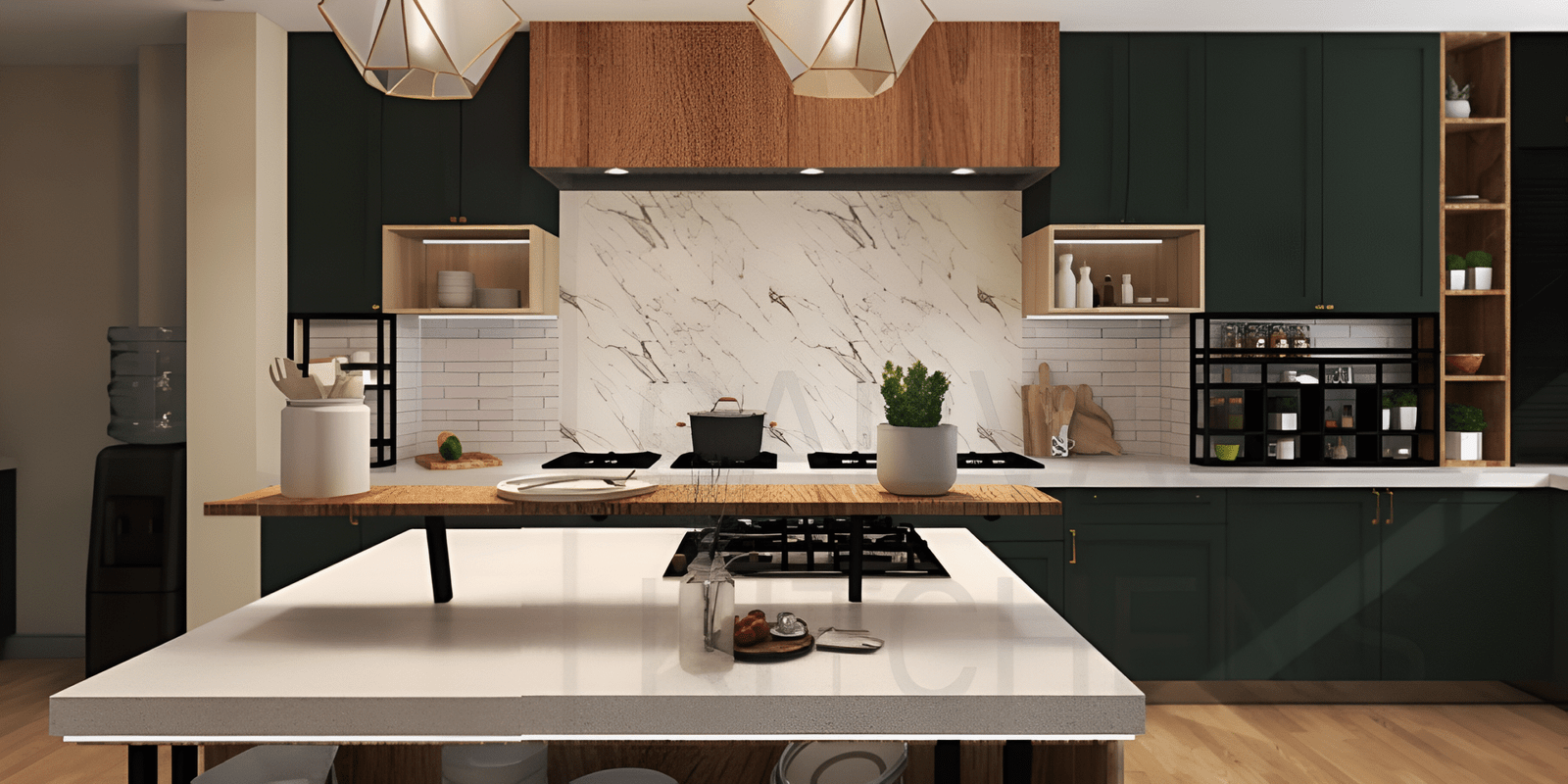
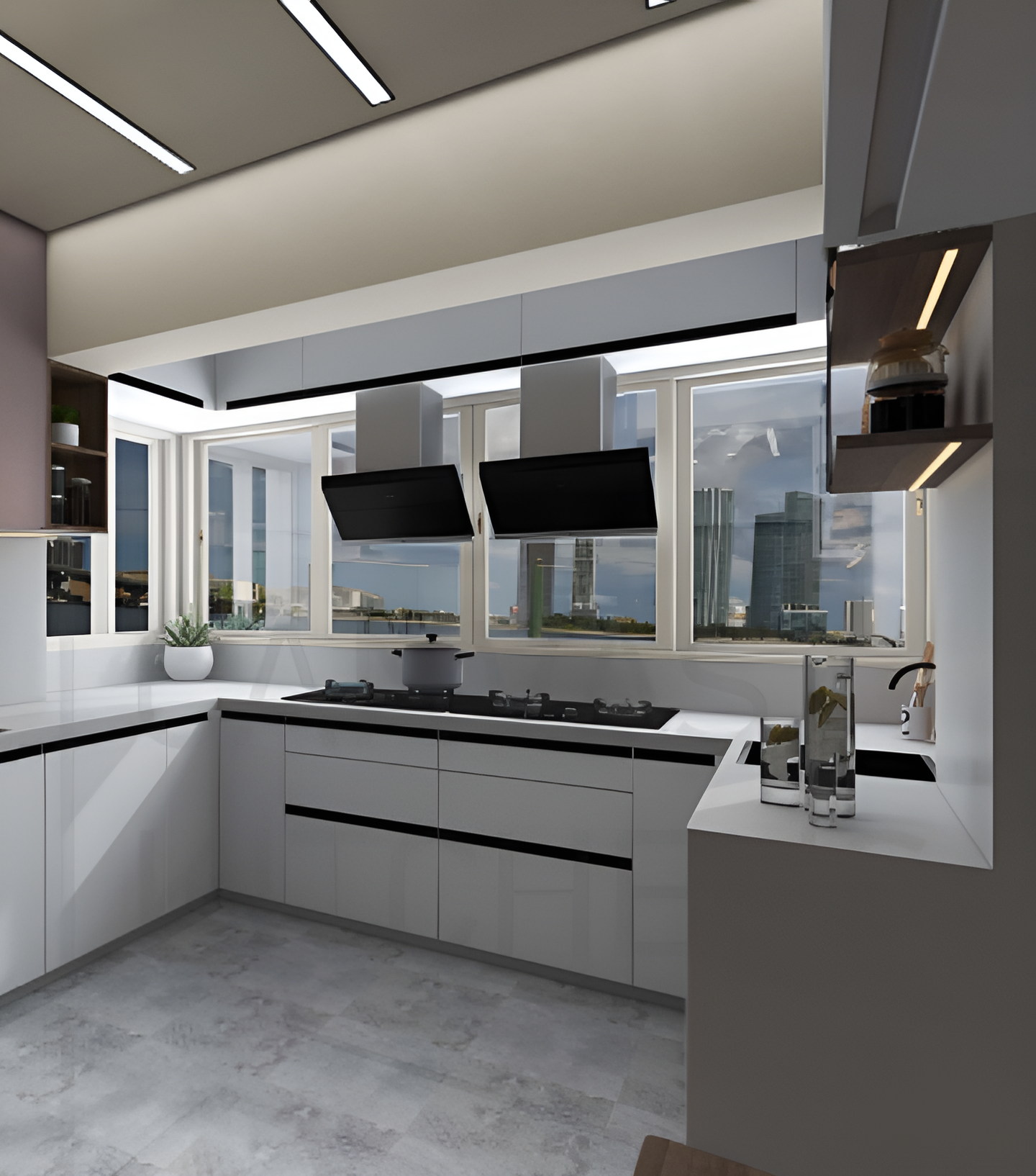
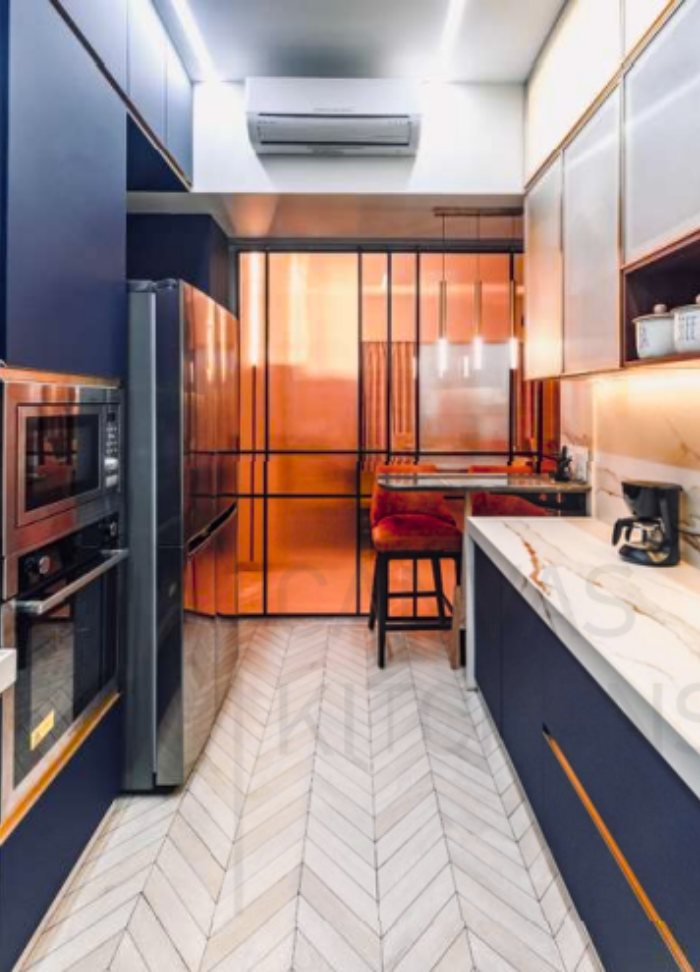
In a luxury kitchen, task lighting is the unsung hero that keeps every functional area lit. To cook safely and effectively, the countertops, sinks, hobs, and islands all need careful, directional brightness that minimizes shadows. Designers use LED strips under upper cabinets, directed spotlights over the hob, and more elegant pendants above the island to ensure precise task lighting only where required. And these light sources are positioned and placed with care to ensure the light beams spread evenly across all surfaces without unsightly shadows.
Why it works:
Task lighting makes meal prep easier, cutting, cleaning, and cooking more comfortable, and ultimately makes everyday life feel smoother and more under control all while looking elevated with sleek, more sophisticated light profiles. When done well, task lighting pairs functionality with visual appeal; it makes routine tasks feel exceptionally well lit.
3. Accent Lighting That Highlights Luxury
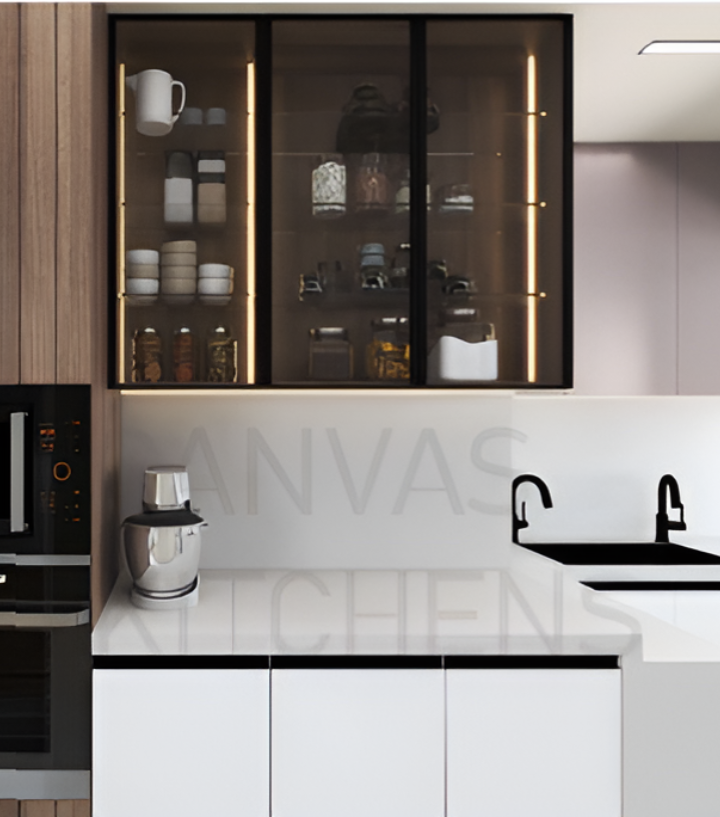
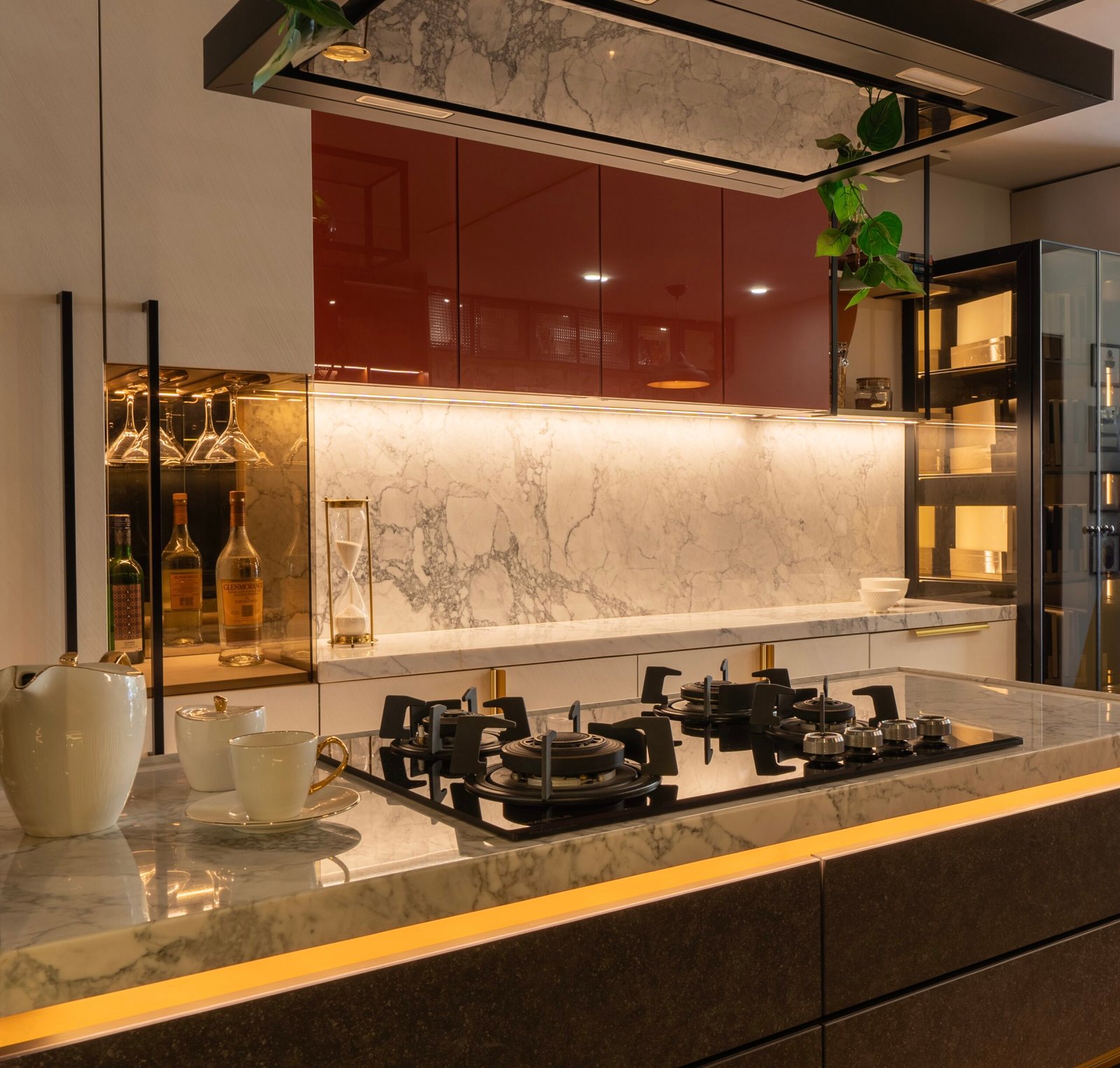
Accent lighting is what takes a kitchen from constructed to curated and expressive. Designers use it to shine a light on linear, high-value materials and finishes including GLAKS shutters, stone or marble backsplashes, sculptural open shelves, niche displays, and local textured fluting, for example. The use of soft cove lighting, under-shelf glows, backlit glass, and wall-washing beams all introduce the idea of depth and visual layering without overwhelming the space. Instead of overshadowing the space, these lights subtly sculpt it and bring warmth, character, and drama to it.
Why it works:
Accent lighting will literally highlight luxury finishes and enhance their texture, reflectiveness, and richness, and turn those surfaces, with their accents, into objects of visual statement. Accent lighting ensures the kitchen feels designed and not just built. And with the right accent lighting in the right areas, a run-of-the-mill floor plan will become imbued with depth, sophistication, and a boutique feel
4. Under-Cabinet Lighting for Seamless Utility
One of the most transformative elements in a luxury kitchen is under cabinet lighting. Streamlined LED strips, hidden below overhead cabinets, cast a consistent, clean glow across the countertop—eliminating dark areas and providing visibility, without drawing attention to the light itself. These subtle lights brighten stone surfaces and make them look smooth and richer in appearance, especially alongside GLAKS shutters or matte PU finishes. The result is a clean, continuous line of light that defines and elevates the workspace in a modern way.
Why does it work?
It strikes the right balance between usable and high design. The hidden lighting allows the surface to feel like it is floating, while providing both the perfect amount of visibility while cooking everyday meals. It’s an understated feature with a surprising visual impact—conveying sophistication, visibility and a designer quality around the entire kitchen.
5. Island Lighting That Creates Impact
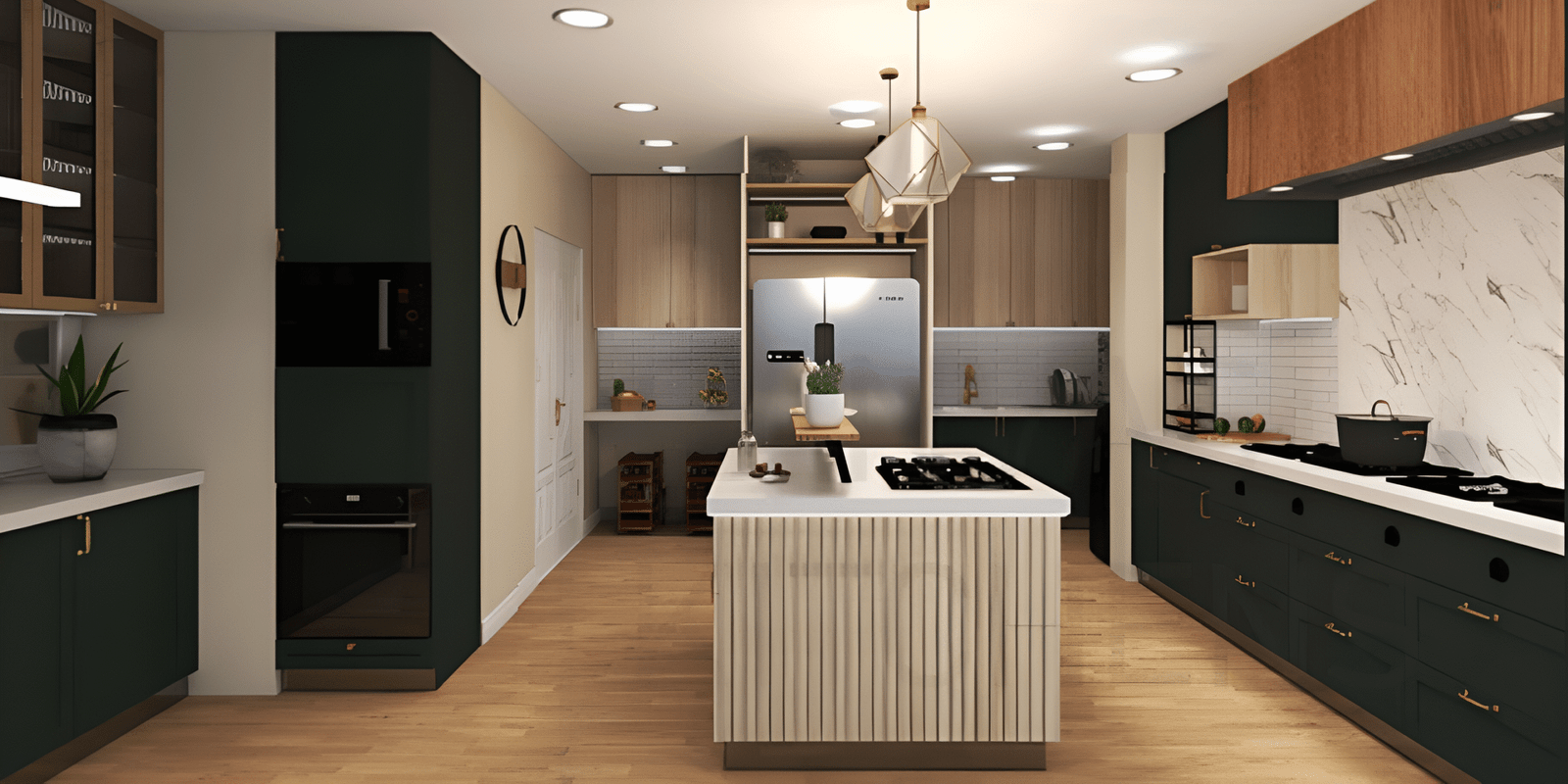
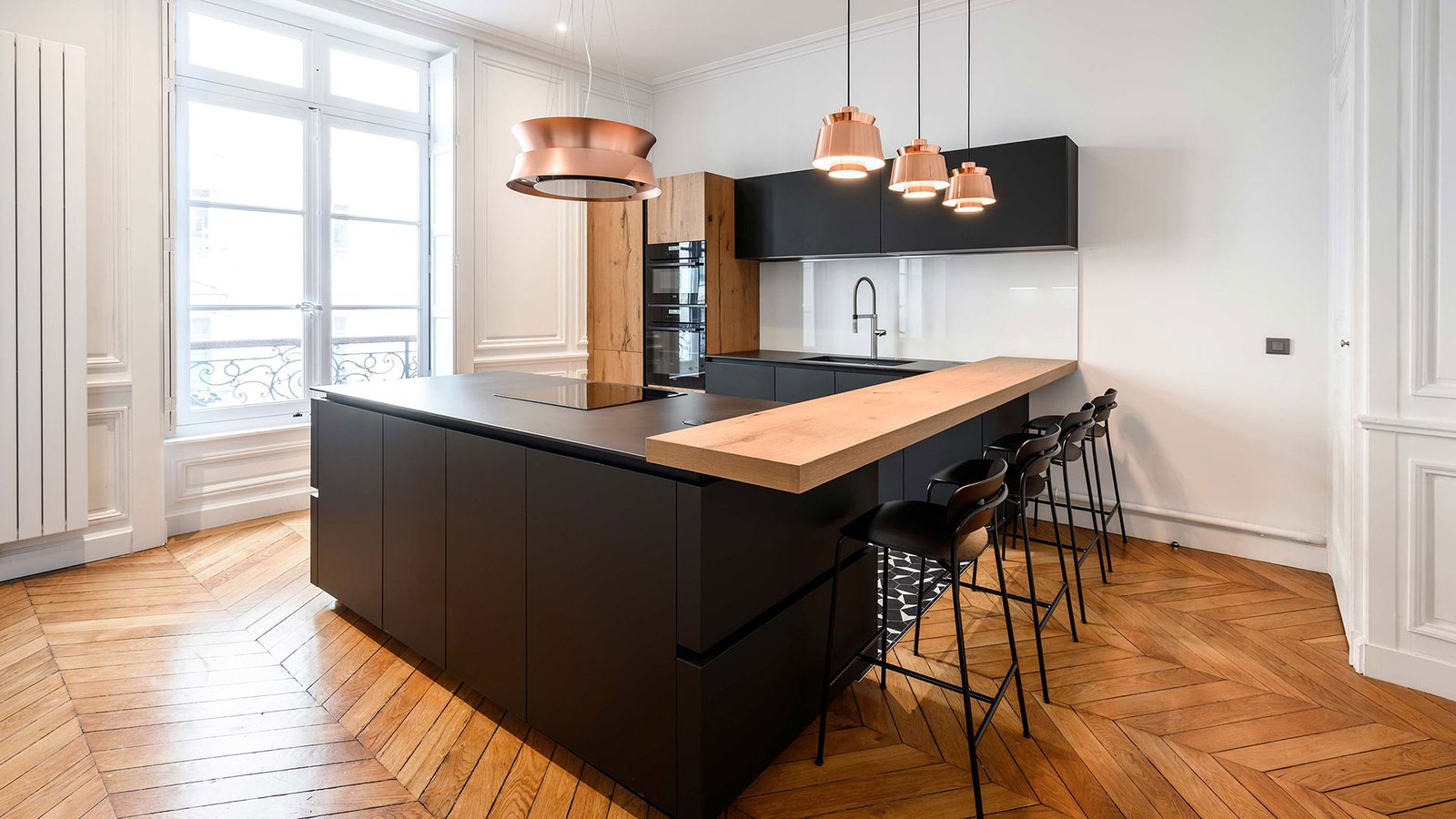
In modern luxury homes, the kitchen island is considered more than a work area; it represents an architectural moment. The lighting for the kitchen island must do more than provide illumination; it must also provide stylized expression. Designers now use statement pendants, linear chandeliers, or sculptural ceiling mount luminaires to denote the island as the social and visual anchor of the kitchen. These lighting configurations are personalized to complement the variety of finishes in the surrounding area of the kitchen environment, such as stone work surfaces or metallic trim elements, to convey a sense of balance and curated sophistication.
Why it works:
It combines functionality with dramatic presence. Island light fixtures depict hierarchy in the kitchen, calls attention to the gathering space in the kitchen, and also inspires a sense of warmth, invitation, and unmistakable luxury. The island is distinguished as an architectural moment in the environment for cooking and conversation
6. Toe-Kick & Floor Strip Lighting for Night Ambience
Toe-kick lighting is one of the most subtle yet luxurious features in a modern kitchen. After installing soft LED strips along the base of lower cabinets, a floating appearance is established which geometrically elevates the space. At night, these lights create a warm glowing pathway that feels both practical and atmospheric, akin to hotel interiors where new luxury is wrapped in design intention. Paired laminates with GLAKS shutters, stone flooring, or matte cabinetry elevations, toe-kick lighting adds visual dimension and an unnoticeable elegance that ties every piece together like a bow.
Why it works:
Toe-kick lighting combines aesthetics and safety by assisting in movement through the kitchen without having to turn on overhead lighting. The soft light adds a level of subtle glamour, defining the kitchen silhouette, and creating a designer finish throughout the space with every detail considered – including when it is dark, and everything is quiet.
7. Smart Lighting Controls for Modern Living
Modern luxury kitchens extend well beyond fixed switches. Designers take smart lighting system to a whole new level, where with a simple tap or vocal command, the lighting accommodates your lifestyle quickly and easily. Dimmable ambient lights, smart motion sensors, app controlled settings, and moods allow the kitchen to transition easily from bright cooking mode to soft evening ambiance. Preparing food, hosting friends, or simply relaxing at home, smart controls allows your lighting to feel intuitive, responsive and elevated.
Why it works:
Smart controls empowers you to personalize your kitchen’s atmosphere with a touch of a button instantly. Each zone can be tuned to brightness, warmth or function – allowing your kitchen to transition for every moment. From vibrant task lighting to warm, golden tones for early night, smart controls empower an elevated experience at your fingertips.
8. Warm vs. Cool Light: Choosing the Right Temperature
Lighting temperature is a major design choice for a luxury kitchen. Warm lighting gives a relaxed, intimate environment — ideal for mood at night or to accentuate lush textures such as veneers and matte PU. Cool lighting provides clarity and precision, giving ample visibility for task zones like the hob, sink, and prep counters. Neutral lighting reaches the ideal mix, with bright white lights enhancing reflective finishes like GLAKS, glass, and high-gloss PU without changing their inherent tones. Designers do not use one lighting temperature, and often use multiple temperatures purposefully to articulate the intent of the kitchen’s mood, and point to specific materials.
Why it works:
The right lighting tone alters the visual identity of your kitchen. Warm tones soften a space and add a hospitable feel; cool tones sharpen visibility and cleanliness; neutral tones provide a crisp, balanced, and purposefully higher notion for premium finishes. When selectively curated, lighting temperature adds depth, flatters materials and ties the kitchen together into feeling integrated, elevated, and impeccably high-end.
Final Thoughts
Kitchen lighting isn’t just illumination — it’s a design tool that influences mood, enhances functionality, and highlights luxury finishes. When layered correctly, it creates a space that feels refined, comfortable, and effortlessly elegant.
✨ At Canvas Kitchens, Wardrobes & More, we curate lighting that complements your kitchen design, enhances your finishes, and transforms your space into a modern masterpiece.
👉 Create a kitchen that glows with style, precision, and timeless sophistication.